Western validation doesn't transfer automatically
Prov-GigaPath and comparable pathology foundation models are trained predominantly on Western cohorts. Several factors mean that performance doesn't automatically generalize to Indian clinical settings.
Population-specific biology
Tumor genomics, mutation prevalence and disease presentation in Indian cancer cohorts differ meaningfully from Western datasets.
Lab & scanner variability
Staining protocols, tissue processing and digital scanner hardware vary widely across Indian pathology labs.
Access beyond metros
Genomic testing is concentrated in a few metropolitan labs, making independent validation the prerequisite for wider access.
Hospital and research partners in Phase 1
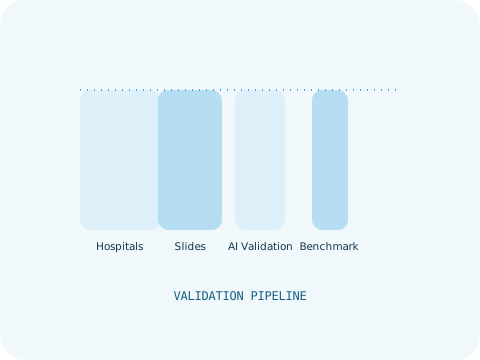
Retrospective cohorts and slide digitization are being coordinated with the following categories of partner — full details on the Collaborations page.
From one dataset to a national validation network
If Phase 1 results support the hypothesis, the natural next step is a prospective, blinded study spanning multiple hospitals and geographies — covering a broader range of scanners, staining protocols and patient populations.
That expansion is deliberately sequenced after, not alongside, Phase 1 — we want the retrospective feasibility signal before asking partner hospitals for a heavier prospective commitment.